How does a brain
wire itself?

We study how neuronal identity, synaptic connectivity and circuit function emerge during development.

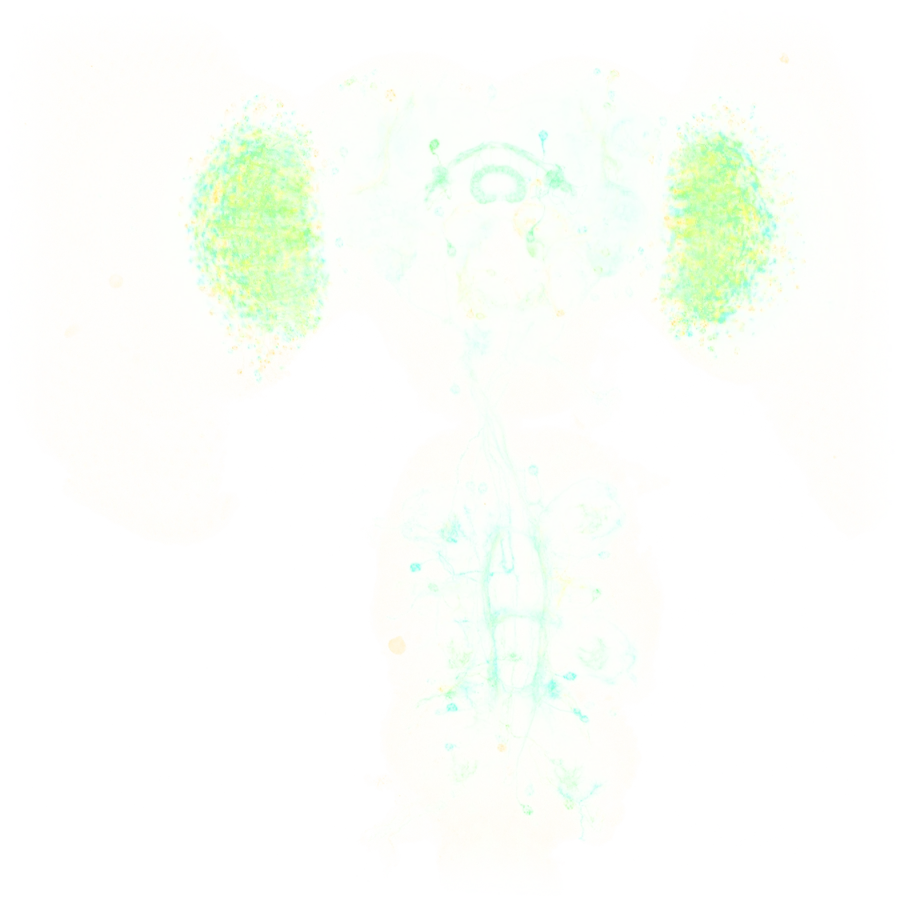
Confocal image of the Drosophila central nervous system: optic lobes on either side of the central brain, above the ventral nerve cord; tissue counterstain in grey, two neuronal markers in teal and amber

Join the lab.

We are recruiting at postdoctoral, graduate and undergraduate level, funded by an Impulscience grant from the Fondation Bettencourt Schueller.

From genes to neurons to synapses to behavior.

Building a functional
neural circuit.

No two brains are wired exactly alike, yet they perform the same functions.

Variation appears at every scale: in gene expression, in cell number, in neuronal morphology, in the number and localization of synapses, yet function survives it. Explaining how is a question about development, because ontogeny is what accounts for the brain an animal ends up with: how much it can vary and still work, and what gives way when it does not, as in disease.

Each step during development constrains and enables the next, so the order in which events occur is part of the mechanism rather than a description of it.

We work on this in the Drosophila visual system, from cell fate specification and the emergence of synaptic connectivity to behavior: a brain small enough to study cell by cell, stereotyped enough that the same neurons can be identified in every animal, and accessible to technologies that reach subcellular resolution in vivo while simultaneously allowing analyses up to behavioral phenotypes.

Gene regulatory networks

What are the gene regulatory networks that specify neuronal identity, from neuroprogenitor divisions to differentiated neurons?

In collaboration with the Özel Lab, Stowers Institute, Kansas City

Omics · CRISPR · Machine Learning
Schematic: patterning transcription factors regulating each other, positively and negatively, in a neuroprogenitor; after division, a terminal selector in the differentiated neuron activates effector genes TF TF division TS adhesion receptors channels NEUROPROGENITORpatterning TFs DIFFERENTIATED NEURONterminal selector EFFECTOR GENESterminal features
→ activates  ·  ⊣ represses

Synaptic specificity

How is synaptic specificity established with subcellular resolution?

Live Imaging · Super Resolution Imaging
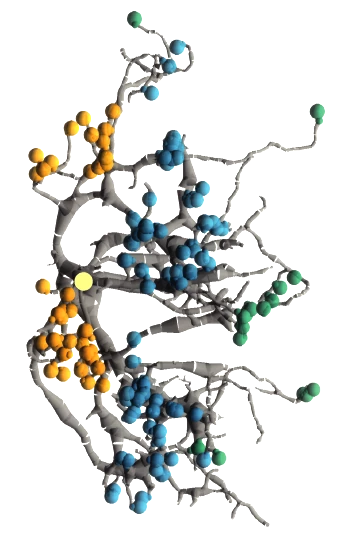
Three-dimensional reconstruction of a T4 neuron dendrite, with synaptic inputs marked as coloured spheres along its branches
3D reconstruction of a visual motion-sensing neuron dendrite, showing the subcellular organization of its synaptic inputs. Built with NeuroNLP.

Spatiotemporal control of synaptic proteins

How are synaptic proteins produced and recruited to synapses in step with the dynamics of circuit assembly?

Post-transcriptional Regulation · SunTag · Live Imaging · Super Resolution
Schematic timeline of two developmental periods: neurogenesis, then neural circuit formation and synaptogenesis. Synaptic protein mRNA is already high during neurogenesis; the synaptic proteins themselves are produced only from the onset of neural circuit formation and synaptogenesis. neurogenesis neural circuit formation and synaptogenesis synaptic protein mRNA synaptic proteins

Visual navigation and plasticity

How does developmental wiring shape neural activity and behavior?

In collaboration with the Wystrach Lab at CBI

Virtual Reality · Modeling · Neural Activity · Behavior
Optomotor response recorded in a virtual reality setup.

Visual neurons for social learning

Mate-copying occurs when females prefer males that have already attracted other females, a phenomenon observed in many species, including Drosophila and humans.

In this project, led by our collaborator Guillaume Isabel, we study how visual cues shape social learning.

In collaboration with the Isabel Lab at CBI

Behavior · Connectomics · Functional Imaging
Demonstration: an observer female, behind a partition, watches a female mating with a green male while a pink male stands by. The partition is transparent for informed females and opaque for uninformed ones. 1 · DEMONSTRATION demonstratorsobserver female partition: transparent (informed)or opaque (uninformed) Mate-choice test: the partition is removed and the observer female chooses between two new males, one green and one pink. 2 · MATE-CHOICE TEST new malesobserver female partition removed
Mate-copying assay. Males dusted green or pink.
⇢ watches  ·  → chooses

More about
our science.

The team.

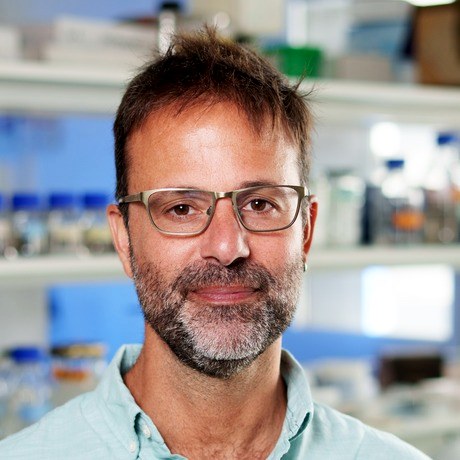
Portrait of Filipe Pinto-Teixeira

Filipe Pinto-Teixeira, PhD

Principal Investigator

Developmental biologist. Music lover. Always curious.Short CV[email protected]
🎹🌊🍜🌍 🇵🇹
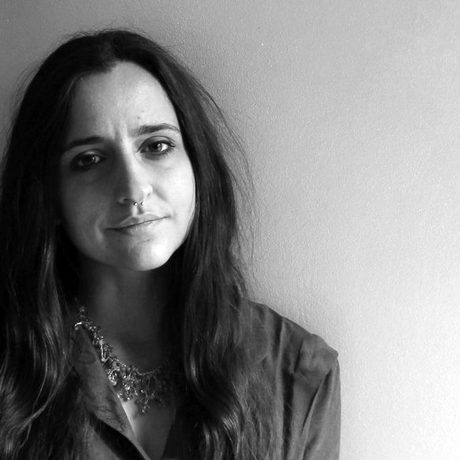
Portrait of Nadia Formicola

Nadia Formicola, PhD

Postdoctoral Fellow · FRM

Nadia studies how the tight spatio-temporal control of gene expression exerted by RNA-based mechanisms impacts neuronal function and connectivity during development.[email protected]
🍕🍫🍪🎥 🇮🇹
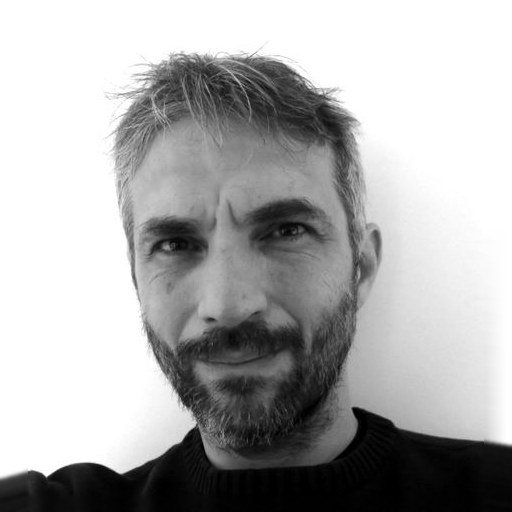
Portrait of Yannick Carrier

Yannick Carrier

Researcher · Lab Manager

Yannick is our molecular biology expert and resident CRISPR guru. He investigates the gene regulatory mechanisms underlying neuronal fate specification and differentiation, in collaboration with the Özel Lab at the Stowers Institute, Kansas City.[email protected]
☕🥐 🇫🇷
Portrait of Laura Quintana Rio

Laura Quintana Rio

Researcher

Laura brings years of experience in Drosophila neurodevelopment to the lab. She is interested in the cellular dynamics of circuit assembly.[email protected]
🍟🍜📚🌍 🇪🇸
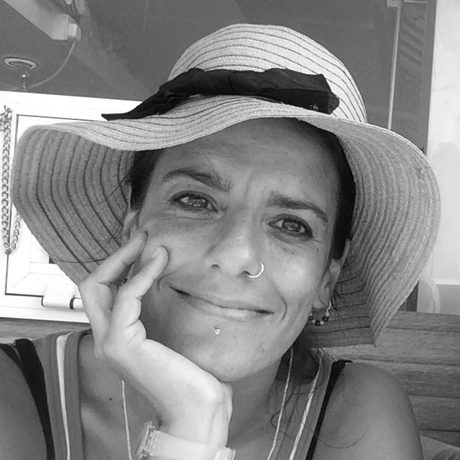
Portrait of Marianne Montemurro

Marianne Montemurro, PhD

Researcher

Marianne studies the relationship between cellular dynamics and post-transcriptional regulation during circuit assembly.[email protected]
🍎🍪 🇫🇷
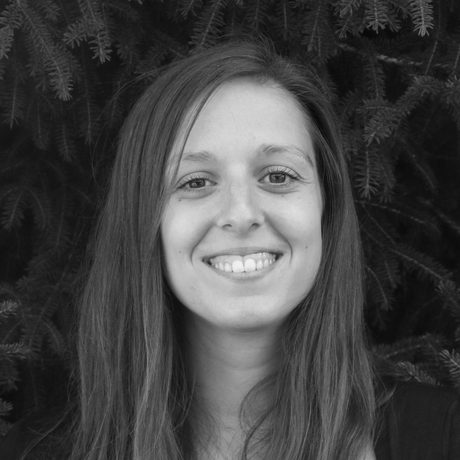
Portrait of Taha Akkülah

Taha Akkülah

PhD Student · BSB fellowship

Taha studies the development of subcellular synaptic specificity.[email protected]
🐱🧿🍟🪭 🇹🇷
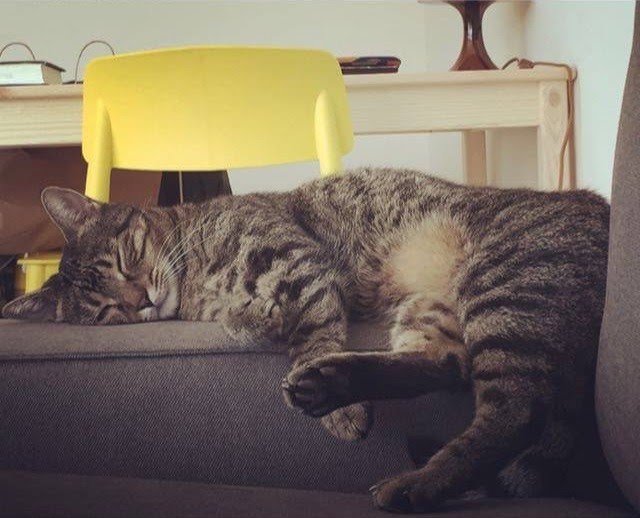
Lula, a tabby cat, asleep on the back of a sofa

Lula, the cat

Feline Grant-Writing Assistant · Emeritus

Lula is interested in the escape response to visual looming stimuli in Musca domestica and other household insects. She is passionate about naps, tinned fish and potato chips, and provides support during grant and manuscript writing. Lula works from home.

Alumni

  • Ananya Narayanan, Undergraduate intern, IISER Pune
  • Enzo Lenel, Master's student, Paul Sabatier, Toulouse
  • Giuliana Attianese, Master's student, University of Naples
  • Maha Tabet, PhD student, Paul Sabatier, Toulouse (Paul Sabatier and FRM fellowships)
  • Vicente de Sousa Xavier, PhD student (FCT fellowship)
  • Jean-Baptiste Forestier, Technician (Ingénieur)
  • Axel Gosso, M1 student, Paul Sabatier, Toulouse
  • Swann Atassi, M2 student, Paul Sabatier, Toulouse
  • Tina Frouin, Bachelor's student, Paul Sabatier, Toulouse
  • Margaux Lairesse, Bachelor's student, Paul Sabatier, Toulouse
  • Sara Hurpy, M1 student, Paul Sabatier, Toulouse
  • Mohamed Raad, M2 student, Paul Sabatier, Toulouse
  • Maëva Wislez, Bachelor's student, University of Nîmes
  • Lisa Orts, Bachelor's student, University of Montpellier

What we've
discovered.

2025

Biased cell adhesion organizes the Drosophila visual motion integration circuit

Carrier Y*, Quintana Rio L*, Formicola N, de Sousa-Xavier V, Tabet M, Chen YD, Haji Ali A, Wislez M, Orts L, Borst A, Pinto-Teixeira F.
Developmental Cell 60(5):762–779

2018

Development of Concurrent Retinotopic Maps in the Fly Motion Detection Circuit

Pinto-Teixeira F, Koo C, Rossi AM, Neriec N, Bertet C, Li X, Del-Valle-Rodriguez A, Desplan C.
Cell 173(2):485–498

Join the lab.

We are recruiting at postdoctoral, graduate and undergraduate level, funded by an Impulscience grant from the Fondation Bettencourt Schueller.

Postdoctoral positions

Two positions are available.

We are looking for independent, creative, collaborative researchers interested in neural circuit development. Several projects are underway, with exciting preliminary data for you to build on. We also strongly welcome your own project ideas, within the lab’s broad lines of research.

Email Filipe with a CV, a statement of your scientific interests, and the contact details of three referees.

Full position details

Master's and graduate students

We are recruiting Master's students for internship projects starting in 2027.

Email Filipe with a CV, a statement in English describing your scientific interests and how they align with our research, and the contact details of two referees.

Generic applications will not be answered.

Undergraduate students

Email Filipe describing your research interests and what you would like to achieve during your time in the lab.

Generic applications will not be answered.

The lab and the institute

The CBI is a multidisciplinary institute of 40 research teams, including a large community of several fly labs. Our lab sits at the interface of the Stem Cells and Developmental Biology and the Molecular and Cellular Neurobiology programs.

We are housed in a new building with access to CBI core facilities: a light imaging facility with 16 acquisition workstations — two-photon in vivo microscopy, spinning disk and scanning confocal, optical tweezers, super-resolution — behavior rigs, and a dedicated fly rearing facility.

Living in Toulouse

Toulouse is the third-largest city in France and has the country's second-largest student population, across three universities. It sits an hour and a half from the Pyrenees in one direction and the Mediterranean coast in the other.

Team tools.

Small utilities we use at the bench.

PCR mix calculator

Works out one bulk master mix for GoTaq G2 or Phusion HF, splits it across primer pairs with a safety margin, and builds the cycling program. Exports the bench sheet as PDF or Excel.

Contact us

Filipe Pinto-Teixeira [email protected]

Centre for Integrative Biology (CBI)
CNRS / University of Toulouse
165 avenue Marianne Grunberg-Manago
31400 Toulouse, France
Open in Google Maps →
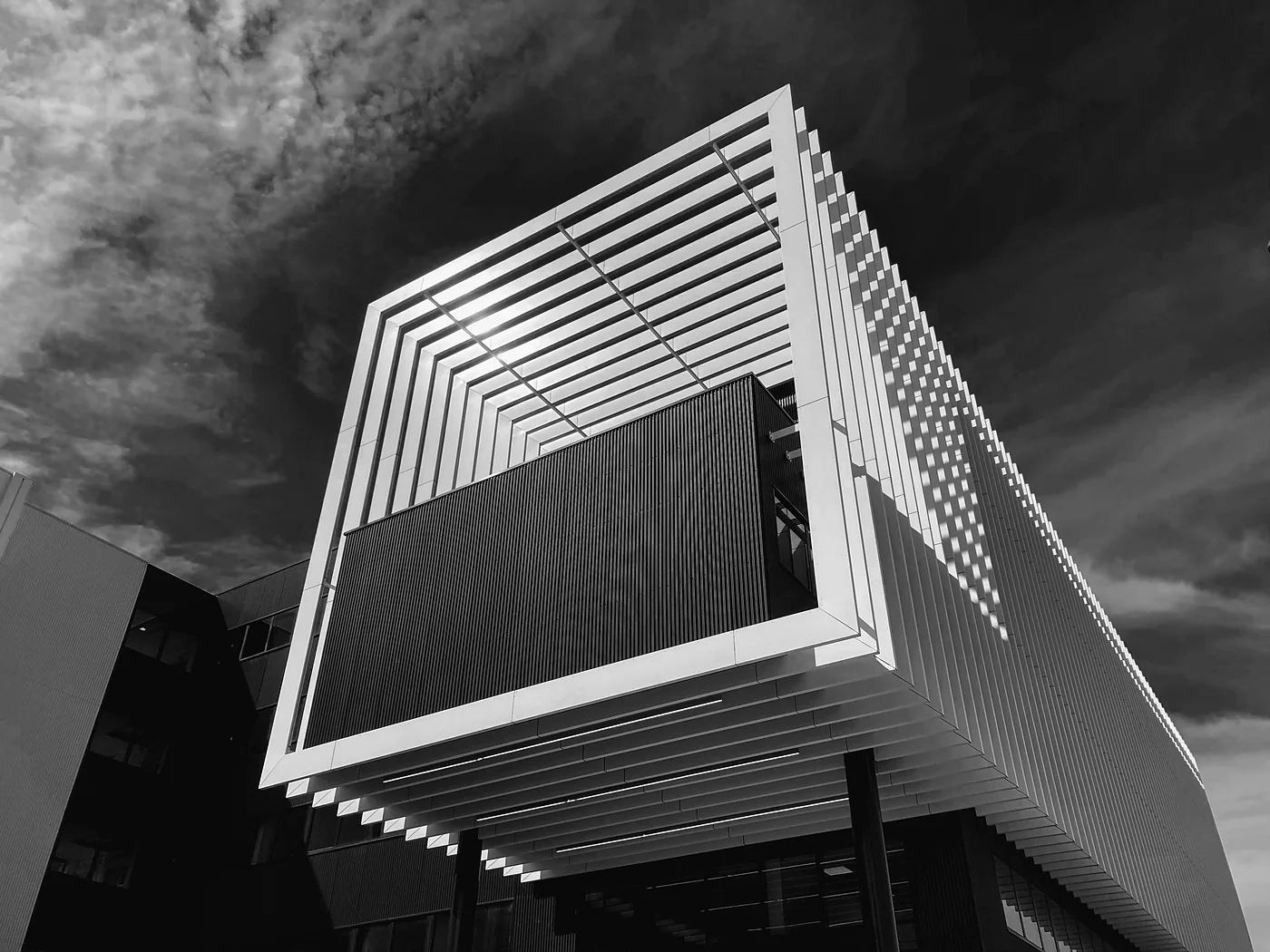
The Centre for Integrative Biology building in Toulouse, seen from below: a white slatted frame projecting over the entrance against a dark sky

Supported by the CNRS and the University of Toulouse, with project funding from the Fondation Bettencourt Schueller, ATIP-Avenir, the FRM, the ANR and the FCT.

TEAM TOOLS
Open on YouTube ↗